Khaleeji — Gulf/Qatari Dialect-Native AI Language & Speech Engine
The only AI that truly understands Qatari and Gulf colloquial speech and seamlessly handles Arabic-English code-switching — unlocking accurate automation where global models break.
Explore the concept Compare all threeThe opportunity
A sovereign language stack purpose-built for Gulf and Qatari colloquial Arabic, including real-time Arabic-English code-switching speech recognition that global and MSA-trained models fail on. It is offered as APIs and fine-tunable models so other AI products (including local chatbots and call centers) can finally understand how Qataris actually speak.
Key features
- Qatari/Gulf-dialect LLM and ASR trained on proprietary regional speech and text corpora
- Real-time code-switching handling for mixed Arabic-English conversations
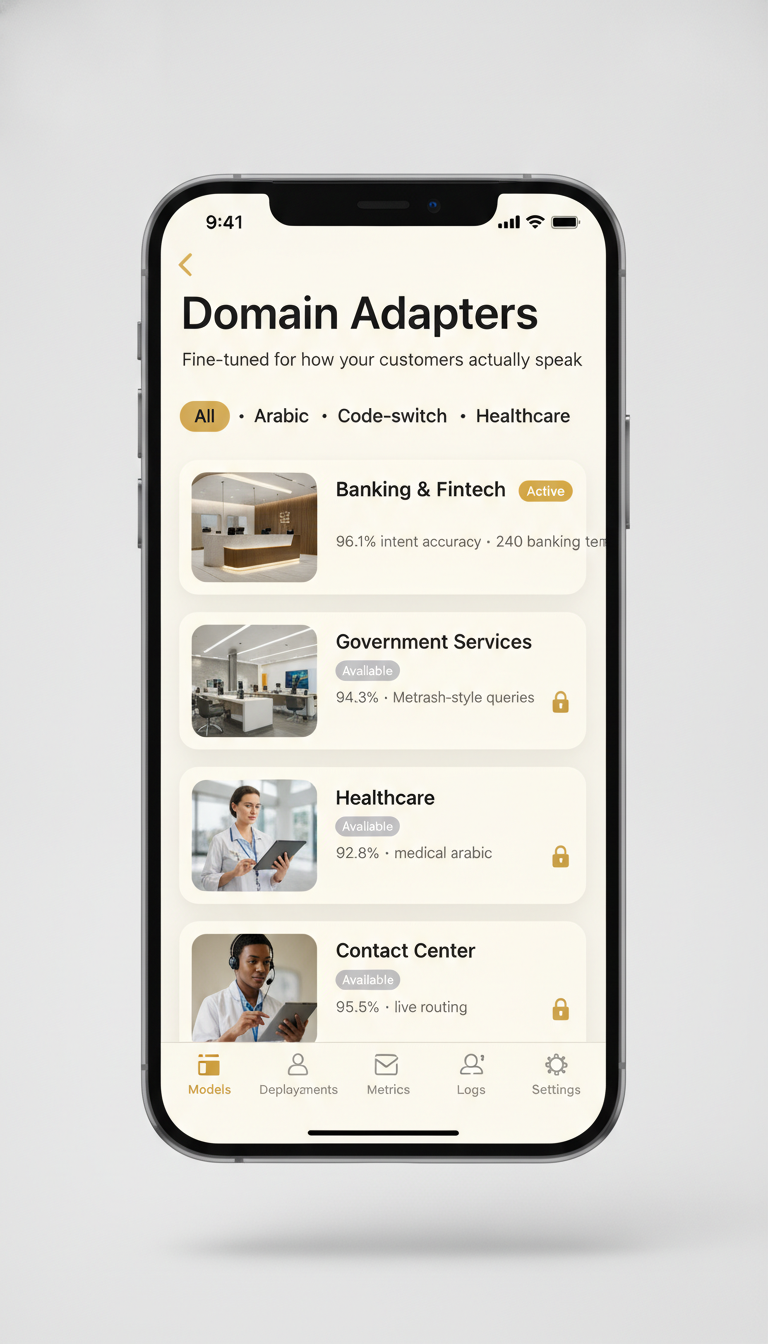
- Domain adapters for call centers, government services, banking and healthcare
- On-prem / sovereign-cloud deployment for data-residency compliance
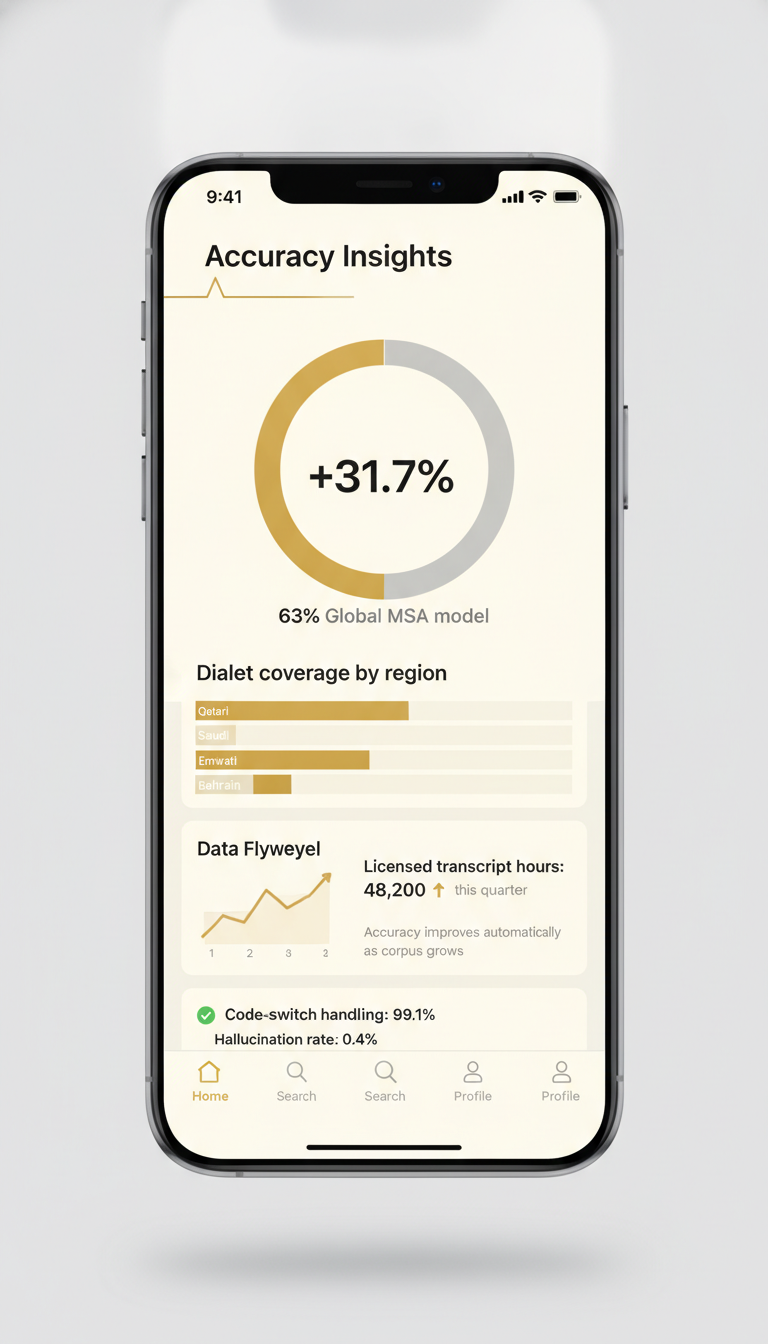
- Continuous data flywheel from licensed contact-center and enterprise transcripts
How it's different
A proprietary Gulf-dialect data moat addressing a structural gap no current LLM solves — defensibility compounds as the data flywheel grows, unlike generic AI tooling.
Best-in-world potential
Highest 'best in the world' ceiling: dialect-specific data is scarce, hard to replicate, and serves the entire Gulf, giving a genuine shot at being the regional standard — though it demands serious data acquisition, compute and ML talent to execute.
API usage + model-licensing fees, with enterprise contracts for fine-tuned private models and a data-licensing revenue stream; premium per-minute pricing for real-time speech.
Contact centers, banks, telecoms, government digital services and AI vendors across Qatar and the wider Gulf needing dialect-accurate Arabic understanding.
- Models fail on Gulf/Qatari dialect (MSA vs. colloquial)
- Arabic-English code-switching breaks speech/AI systems
- Sovereign-compute and data-localization infrastructure gaps
- Pressure of falling behind regional peers
See Khaleeji in action
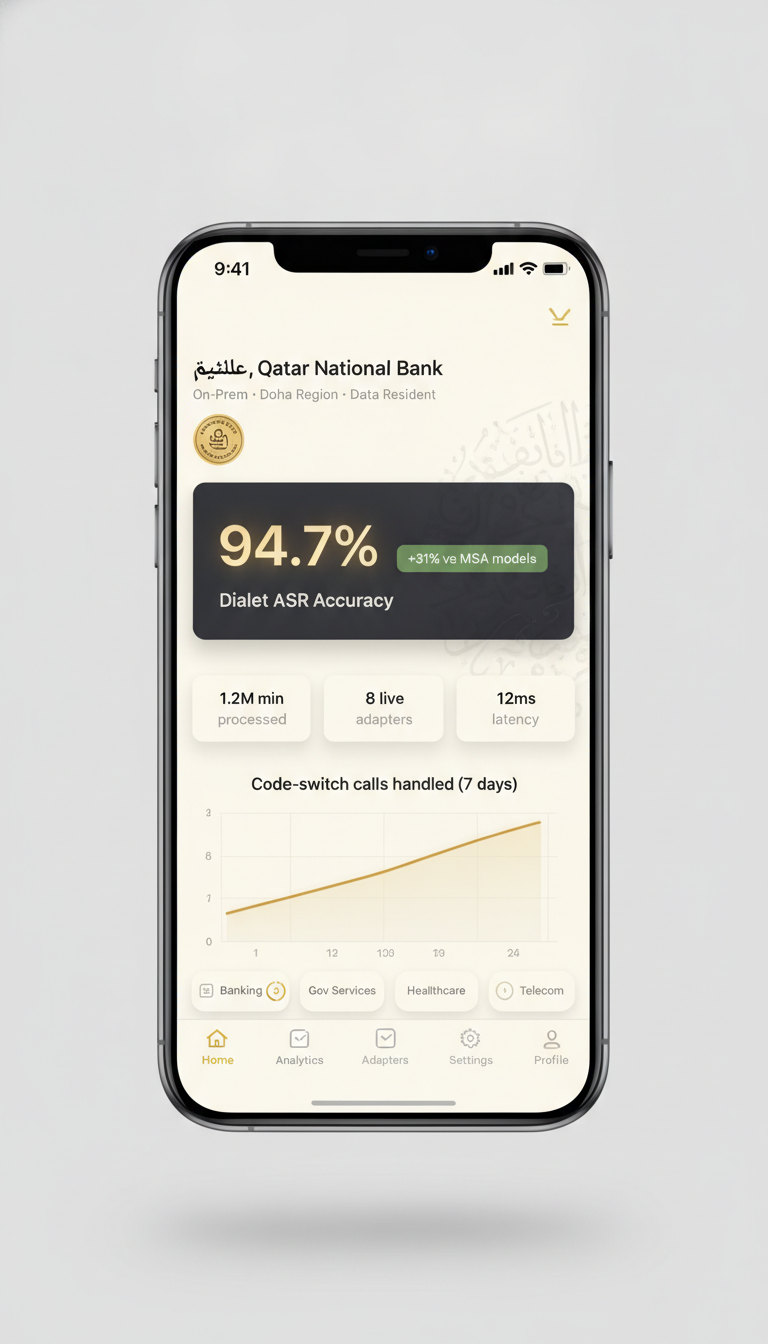
The first AI that truly speaks Gulf — dialect, code-switch and all. — An enterprise user opens the dashboard to monitor dialect-accurate AI performance, taps into a live code-switching transcription demo to hear Khaleeji parse a real Qatari Arabic-English call in real time, then selects a domain adapter (banking, gov, healthcare) and reviews accuracy insights proving where global models break and Khaleeji wins.
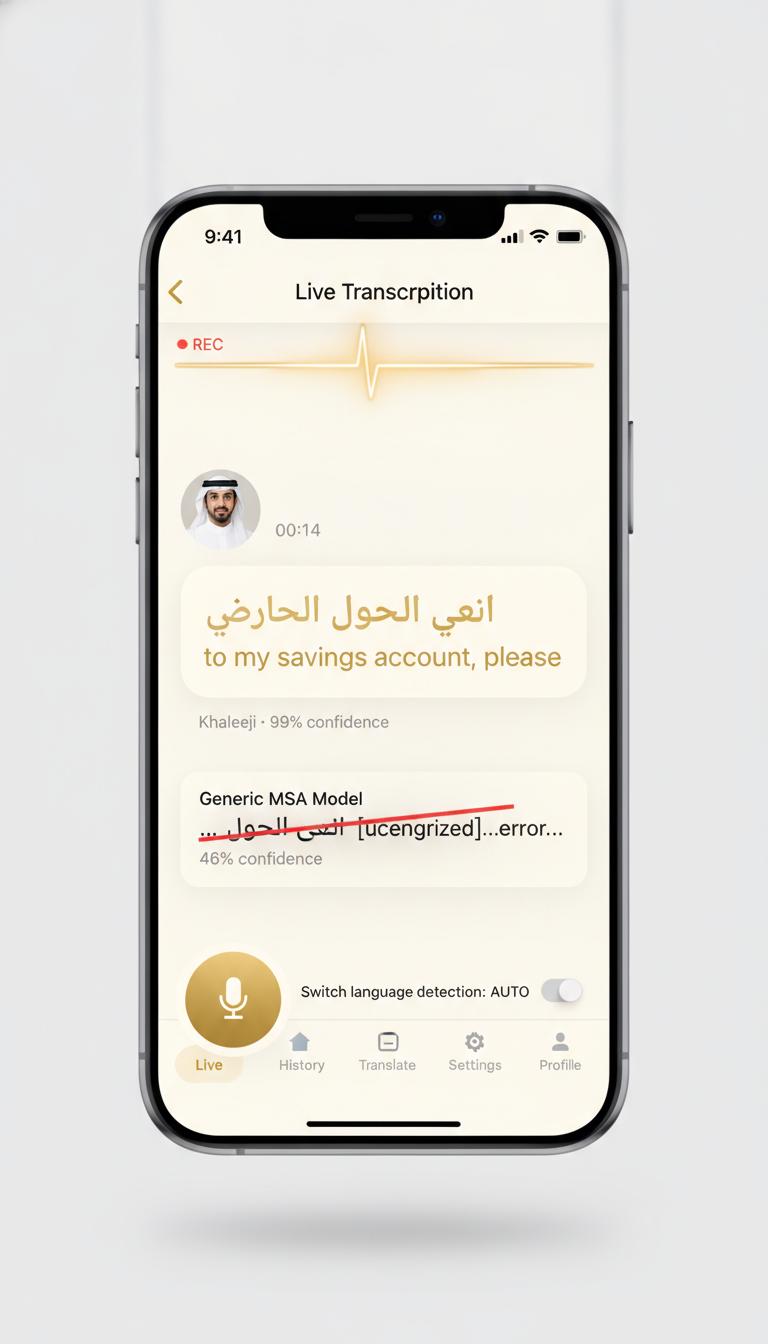
The live transcription screen: a real Qatari customer speaking mixed Arabic-English ('أبي أحول مبلغ to my savings account, please') is transcribed flawlessly in real time with each language color-coded, while a ghosted side-by-side shows a generic MSA model garbling the same audio.
Why this MVPThe core claim — that Khaleeji understands how Qataris actually speak where global/MSA models fail — is provable in a single screen: a live code-switching transcription with a visible accuracy gap. If a contact-center buyer sees their own dialect parsed correctly in real time beside a broken generic model, the data-moat value proposition lands instantly, justifying the heavy data/compute build behind it.
Voices behind the demand
Real signals from user discussions and web research about AI soulation for qatar — the unmet needs this concept addresses.
“A model trained on MSA performs poorly on Gulf dialect text, and a model trained on Egyptian Arabic will fail on Qatari colloquial inputs — a structural problem for enterprise AI handling Arabic.”
“A limited and fragmented supply of Arabic-language data is capping the performance of domestic models, and no current LLM fully understands the depth of the region's Arabic.”
“Traditional Arabic speech recognition processes each language independently, causing context loss during mid-conversation language transitions common in Gulf call center operations.”
“Adoption depends on building out HPC, hyperscale data centers and AI-ready cloud platforms plus sovereign AI capabilities; the foundational compute/data-residency layer is still being built, with high capital requirements as a stated challenge.”
“Regional and international competition is intensifying, with the UAE, Saudi Arabia and global economies scaling AI initiatives rapidly and investing billions, pressuring Qatar to close gaps in talent, governance and cross-industry adoption.”