Hawkamah — AI Governance & Shadow-AI Control Platform
Adopt AI confidently and stay compliant with Qatar's evolving rules — without a million-QAR governance program or in-house legal experts.
Explore the concept Compare all threeThe opportunity
A SaaS control plane that discovers ungoverned 'shadow AI' usage, enforces data-sharing policies, and maps activity to Qatar's patchwork of PDPPL and cybercrime rules through prebuilt, regularly updated compliance templates. It gives SMEs and mid-market firms an affordable, auditable way to adopt AI without expensive legal teams or QAR-2M compliance spends.
Key features
- Shadow-AI discovery and tool inventory across employee usage
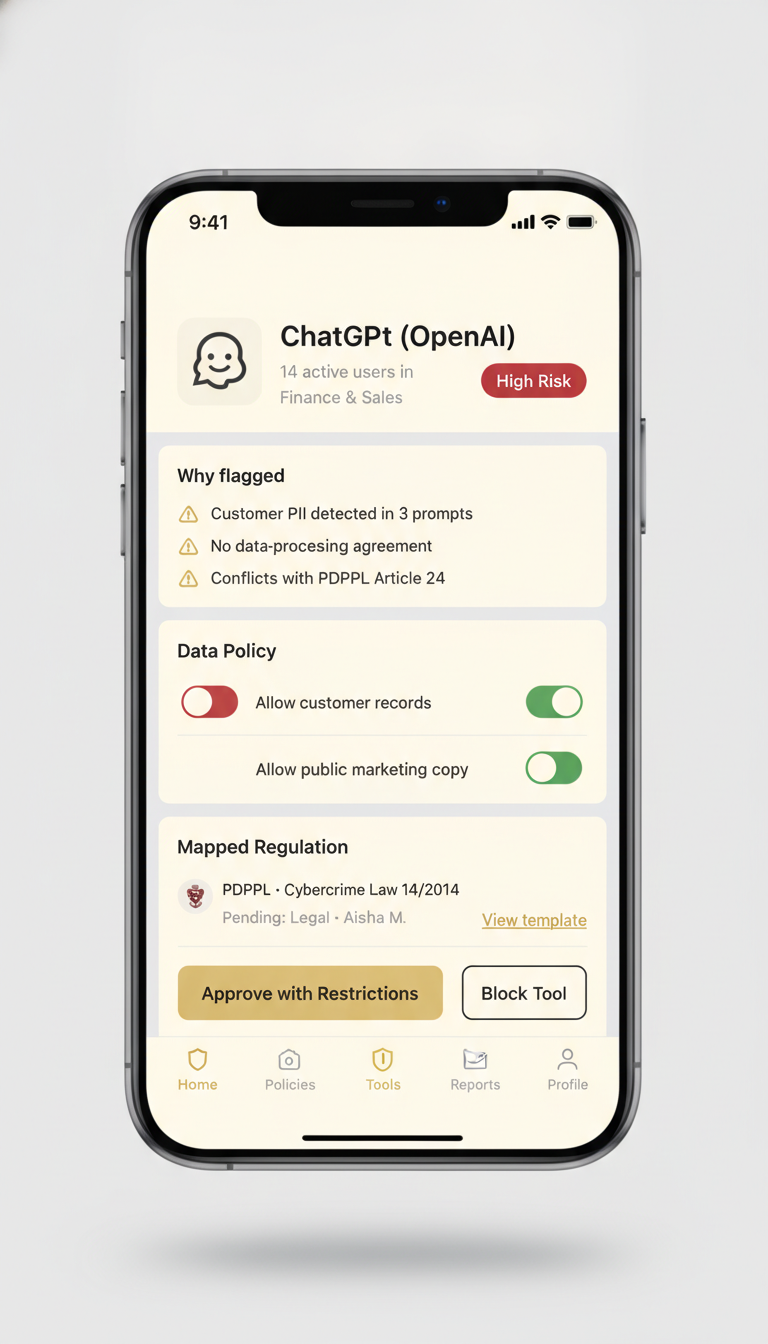
- Policy engine for what data can enter which tools, with approval workflows
- Prebuilt Qatar/GCC compliance templates (PDPPL, cybercrime law) kept current
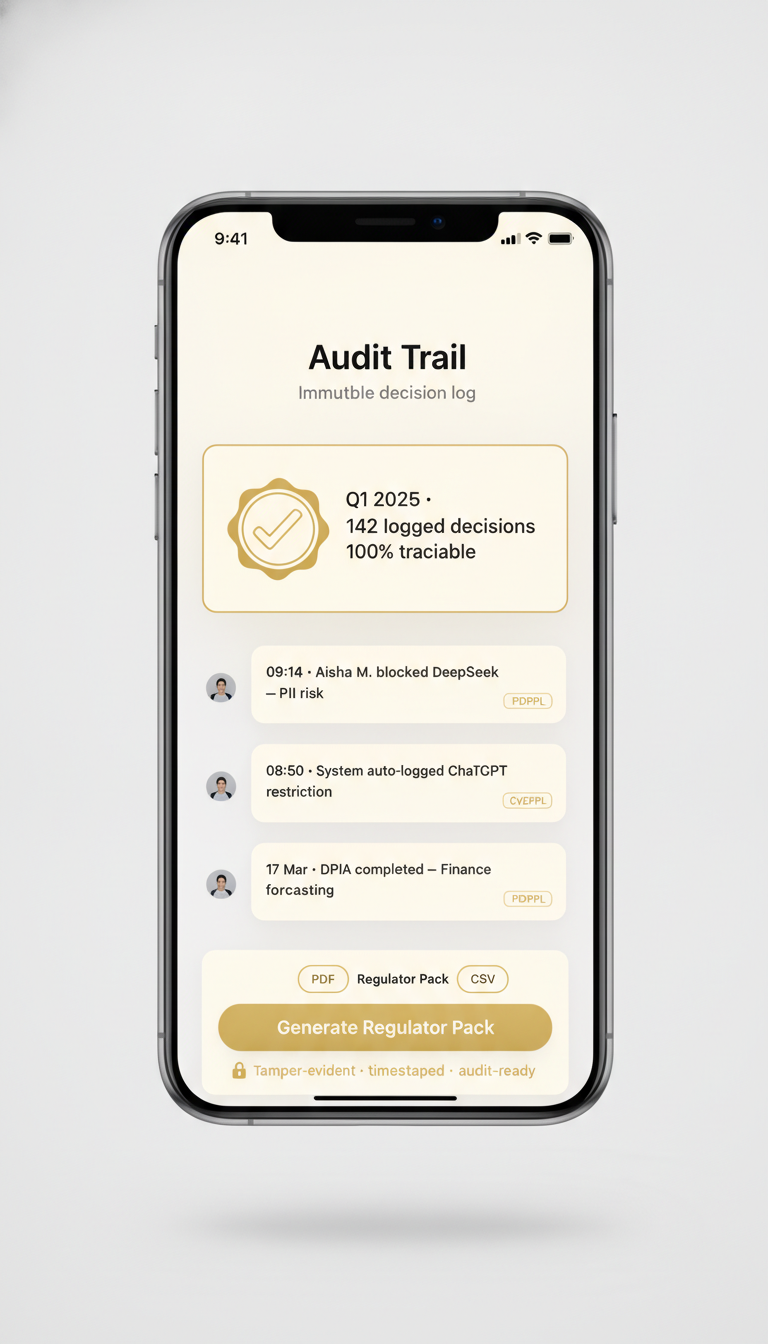
- Automated audit trails and decision-transparency logging for regulators
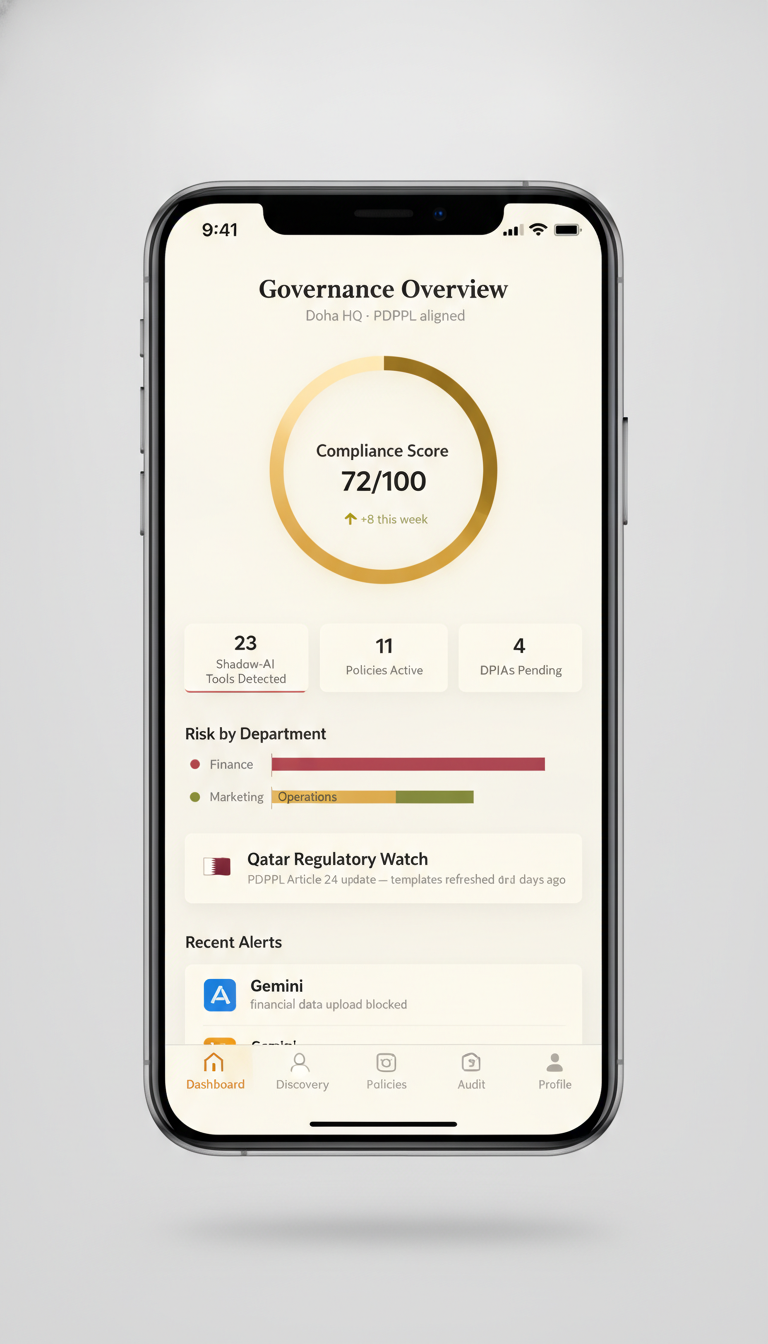
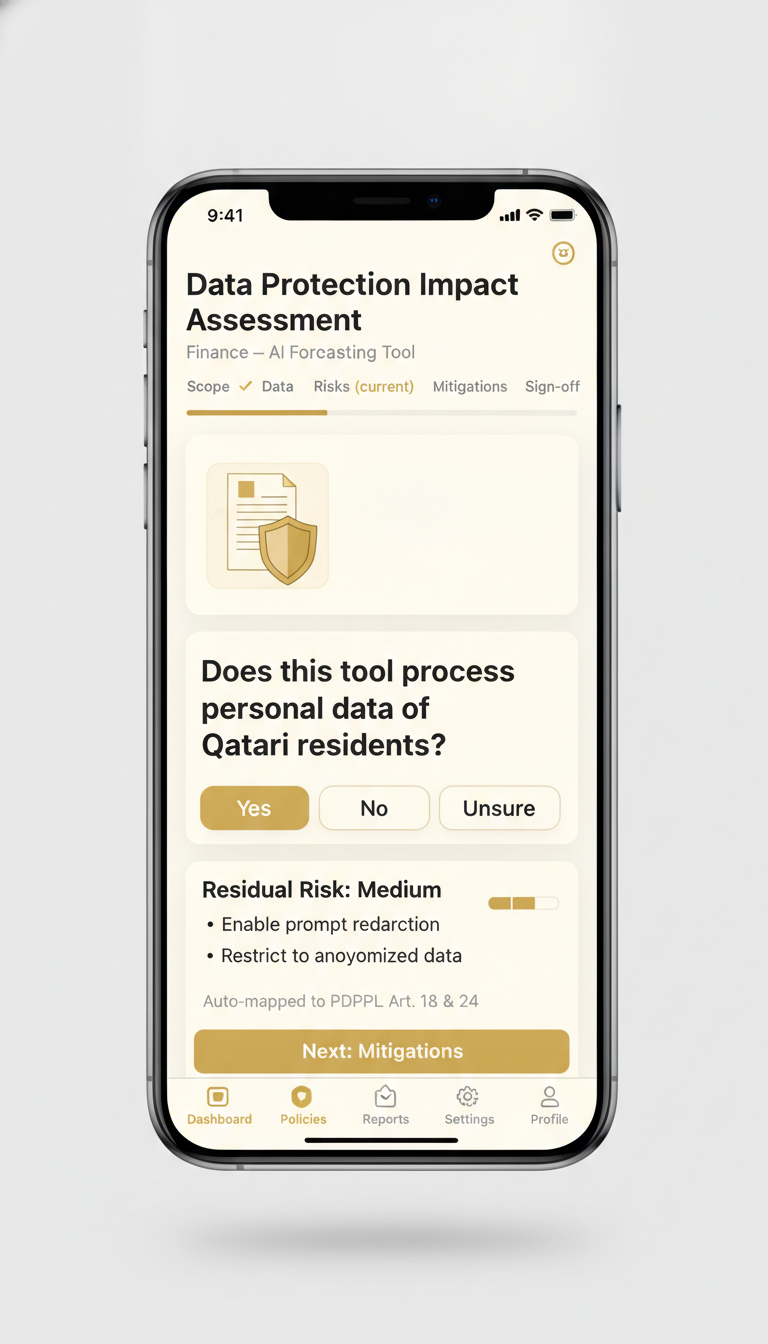
- Risk dashboards and DPIA-style assessments for non-specialist managers
How it's different
Localizes governance to Qatar's specific fragmented legal patchwork and surfaces invisible shadow-AI risk — turning an expensive, ambiguous compliance burden into an affordable guided workflow.
Best-in-world potential
Solid leadership potential within Qatar/GCC governance as a focused, locally-tuned tool, but global GRC and AI-governance vendors are entering fast, so the moat rests on regulatory localization and integration depth rather than unique technology.
Per-seat SaaS subscription with tiered compliance modules; partner revenue-share with law firms and consultancies; natural attach-on to SME AI and dialect-engine deployments.
Qatari SMEs and mid-market enterprises, plus regulated sectors (finance, healthcare) needing demonstrable AI governance amid regulatory uncertainty.
- 'Shadow AI' — ungoverned tool use and accountability gaps
- No dedicated AI law — fragmented compliance burden
- Lack of standardized governance and low compliance rates
- Cost of governance and compliance is itself a barrier
See Hawkamah in action
Govern your AI. Prove it. Stay compliant with Qatar's rules. — A compliance manager opens the risk dashboard to see discovered shadow-AI tools and their risk scores, drills into a flagged tool to approve or block it against Qatar's PDPPL rules, runs a guided DPIA assessment, then exports a regulator-ready audit trail.
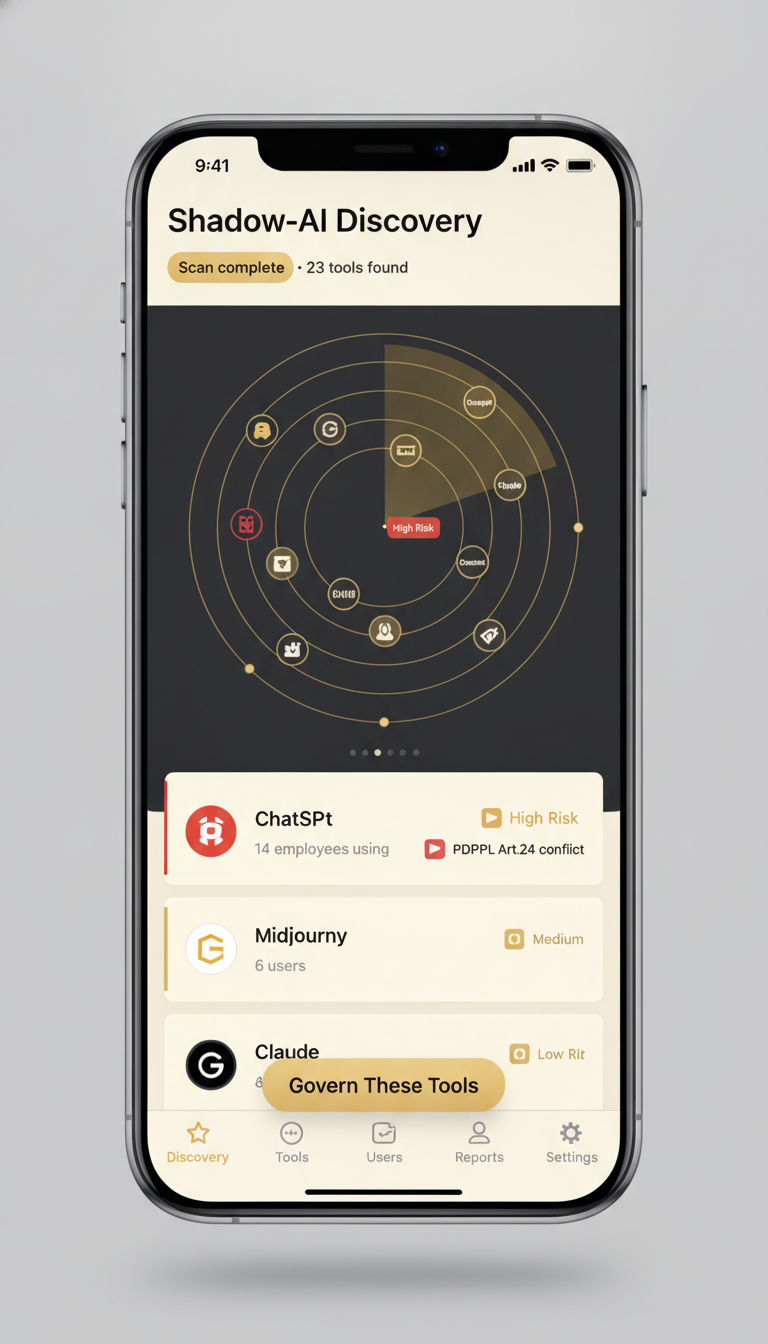
The moment the Shadow-AI Discovery radar lights up — instantly surfacing 23 ungoverned AI tools employees are secretly using, each scored against Qatar's PDPPL and cybercrime law, turning invisible risk into a ranked, actionable list in seconds.
Why this MVPThe core pain is invisible, ungoverned 'shadow AI' and a fragmented Qatari legal patchwork that SMEs can't afford to navigate. By proving we can (1) automatically discover hidden AI usage and (2) map each tool to localized PDPPL/cybercrime templates with an exportable audit trail, these few screens demonstrate the entire value proposition — affordable, auditable governance without a QAR-2M program — which is exactly what would make a regulated SME sign up.
Voices behind the demand
Real signals from user discussions and web research about AI soulation for qatar — the unmet needs this concept addresses.
“A manager pastes a contract into a chatbot, a sales team uses an AI note taker, finance experiments with automated analysis — usage spreads before the business has agreed what data may be shared, which tools are approved, or who is responsible for review, creating hidden data, compliance or trust problems that are expensive to unwind later.”
“Qatar has not enacted a dedicated AI law; AI is governed by a patchwork of data protection (PDPPL Law No. 13 of 2016) and cybercrime (Law No. 14 of 2014) rules, forcing organizations to navigate a complex framework across multiple legal domains. Primary risks include non-compliance with data protection, insufficient transparency in automated decision-making, and cybersecurity exposure.”
“55% of Qatari businesses cite unclear AI regulations and compliance risks as barriers to adoption.”
“The absence of standardized regulations poses significant challenges; only 40% of organizations comply with existing guidelines, creating inconsistencies and stakeholder confusion, and the slow pace of regulatory development remains a concern.”
“Companies are expected to spend an average of QAR 2 million on AI compliance measures, described as 'prohibitive for SMEs' and limiting their ability to adopt AI at all.”